

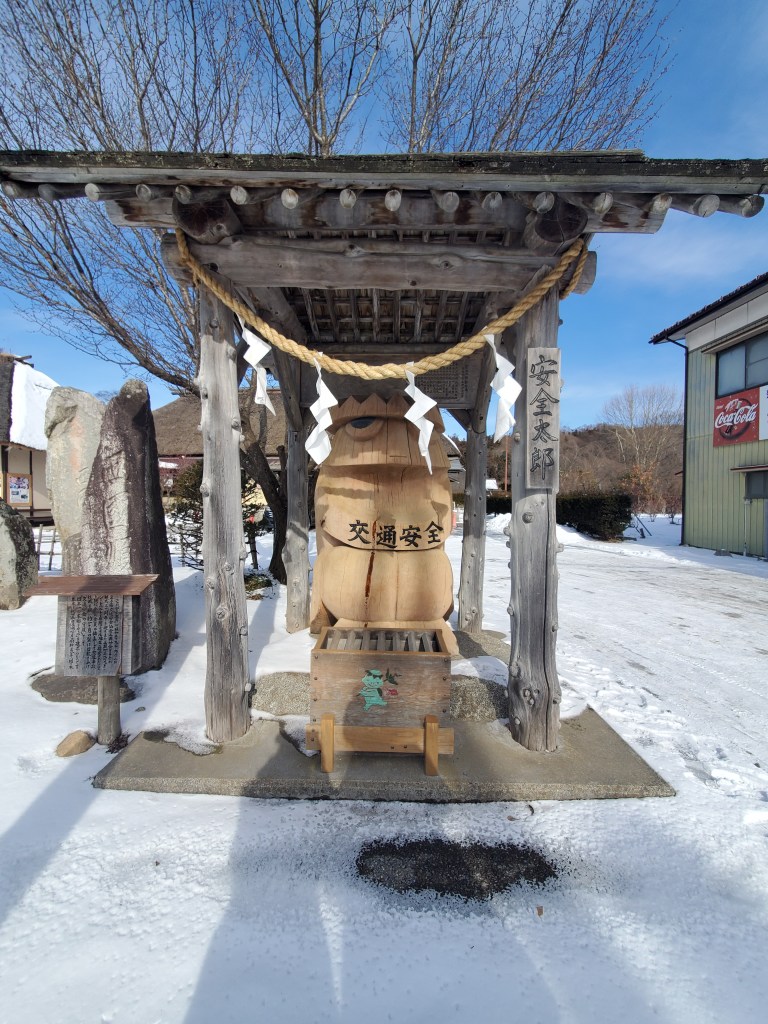
After visiting the snow covered shrine, we stopped in at the only little shop in town. The shop was pretty small and sold canned goods, beverages and some snacks. We hadn’t really eaten in 24 hours, so we bought some buns with jam in them, chips and hot coffee to warm up with. We ate the food just outside the store before heading to Denshoen, a little traditional village next door to the shop. There was a huge wooden statue of a kappa out front of the entrance and gift shop.
We decided to visit the shop (which is also where you buy tickets), I bought a kappa reusable shopping bag with kappas playing on cucumbers printed all over it. We also purchased a little stuffed kappa to put in our curiosity cupboard at home (a little cabinet we fill with small souvenirs from abroad). We paid the 660 Yen entrance fee for two people to enter Denshoen cultural village.
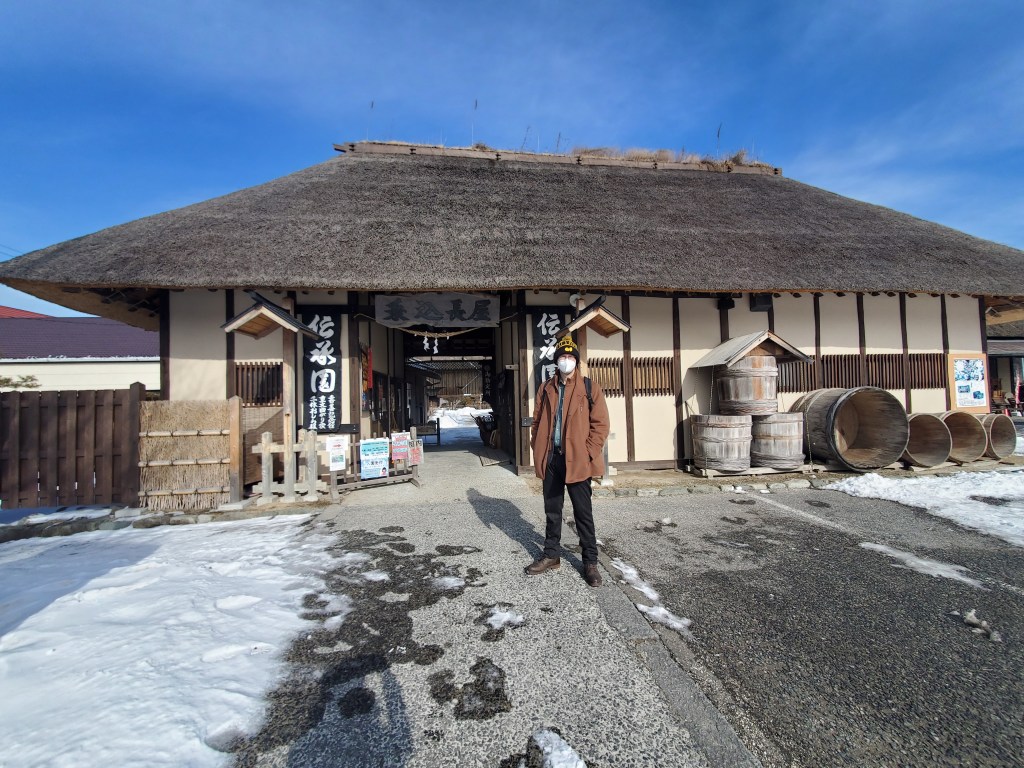
We entered the park which consisted of about six larger thatched roof buildings and many smaller outlying buildings. The village is made up of traditional buildings that have been brought or moved to this area in order to show what it was like living in the region of Iwate and Tohoku a century or more ago.
The first building we entered was filled with traditional crafts, handmade dolls and mobiles. The building was large like a hall and filled with tatami flooring. There was a very beautiful mural of a snowy Japanese forest on one wall. Next we visited the traditional “L” shaped building. The one end of the “L” is constructed for the horses and livestock to live in and the other end is for the people to live. The corner of the “L” was filled with a smokey fire and some farm equipment. We explored the various rooms of the house, as well as a silkworm and silk producing room, before heading back outside. You have to remove your shoes to enter the houses, and the buildings are not heated (they are traditional you see) so your feet can get very cold walking around. The day we visited it was minus 13 degrees celsius, which makes for very cold toes.
We walked around the grounds, exploring a mill, bath house and small shrine, as well as the snow covered gardens, but we couldn’t find the entrance to the Oshira shrine (or as we referred to it, the horse girl shrine). We eventually figured out that the entrance to the shrine was inside the ‘L” shaped farmhouse. There is a small sliding door in the living area of the house that opens up to a tunnelway or narrow passage that bends and ends up at the colourful Oshira shrine. The shrine is for Oshirasama, the god of silkworms, agriculture and horses and is famous for a folklore tale that takes place in this very spot. The story has many variations, but I will share the most prominent one with you.
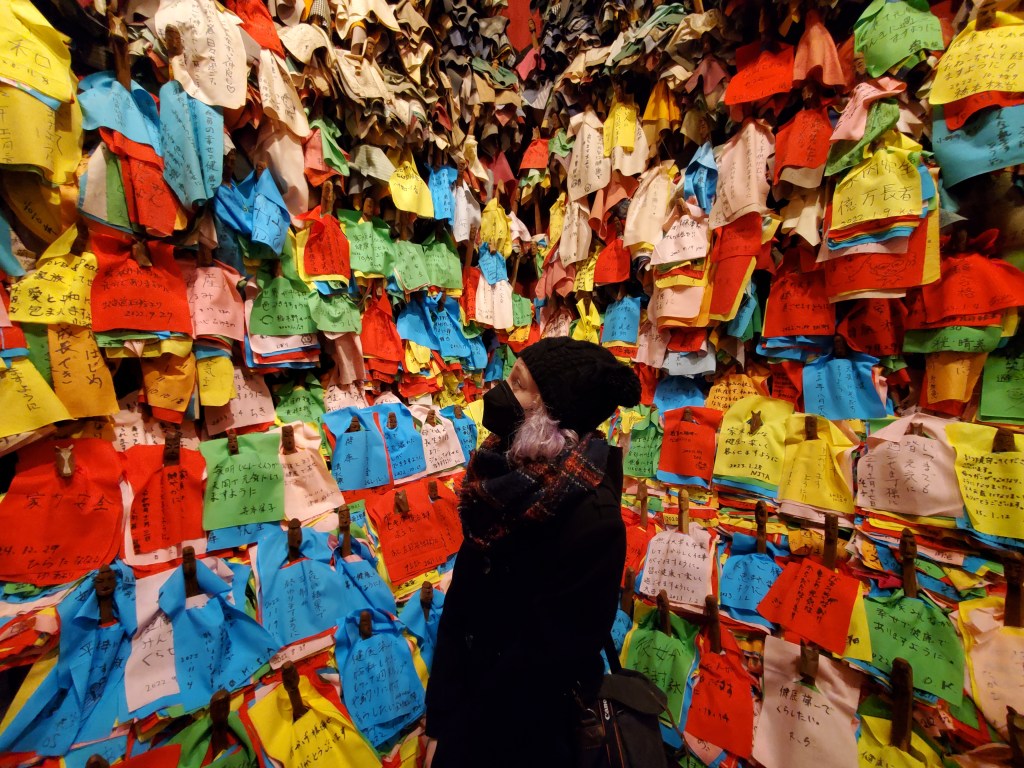
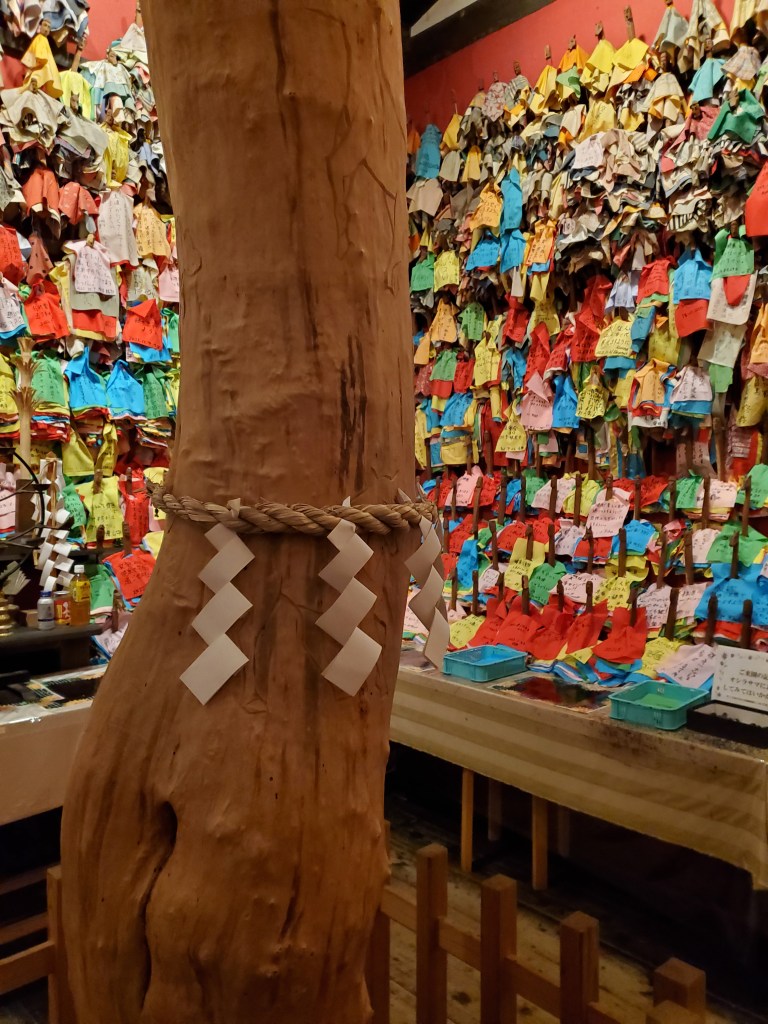
A young girl living in Tono had a horse that she loved very much, the father killed the horse (reasons vary) and hung the body from a mulberry tree. The young girl was upset at the loss of the horse and clung on to the body as it went up to heaven. Oshirasama is depicted as a mulberry branch with the head of a horse carved into one end. There is a mulberry tree at the centre of the shrine as well. Mulberry trees are very important to silkworm/silk production, so the shrine is important to farmers. You can write wishes down on colourful pieces of cloth and place them on the mulberry pegs shaped like horses.
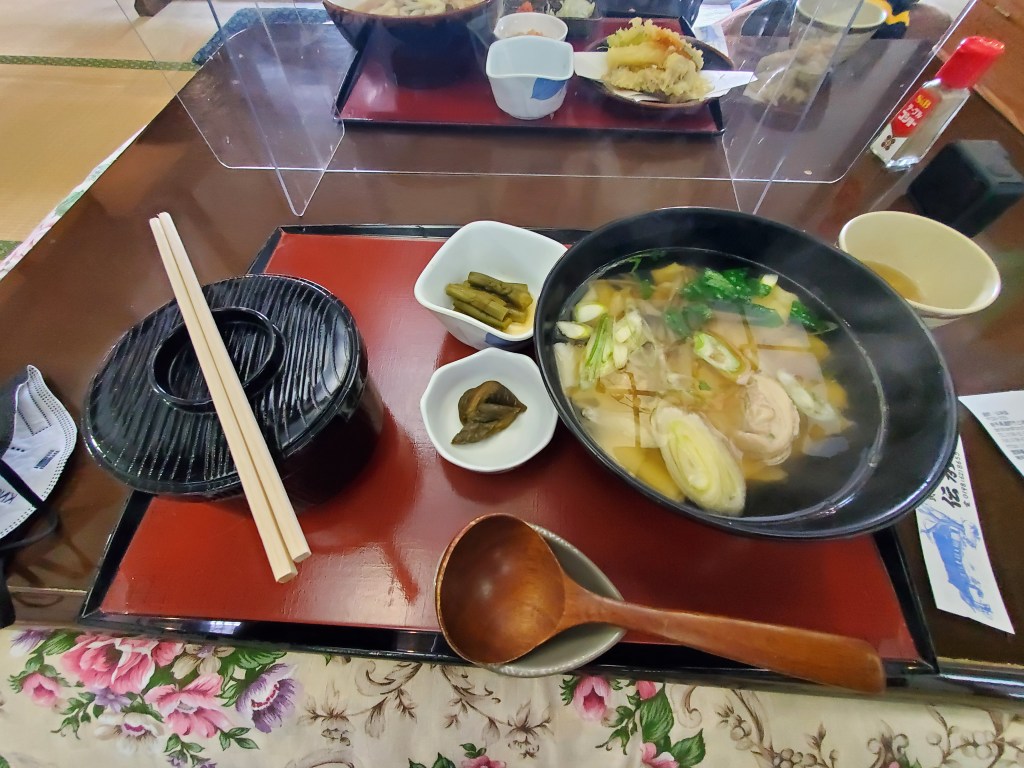
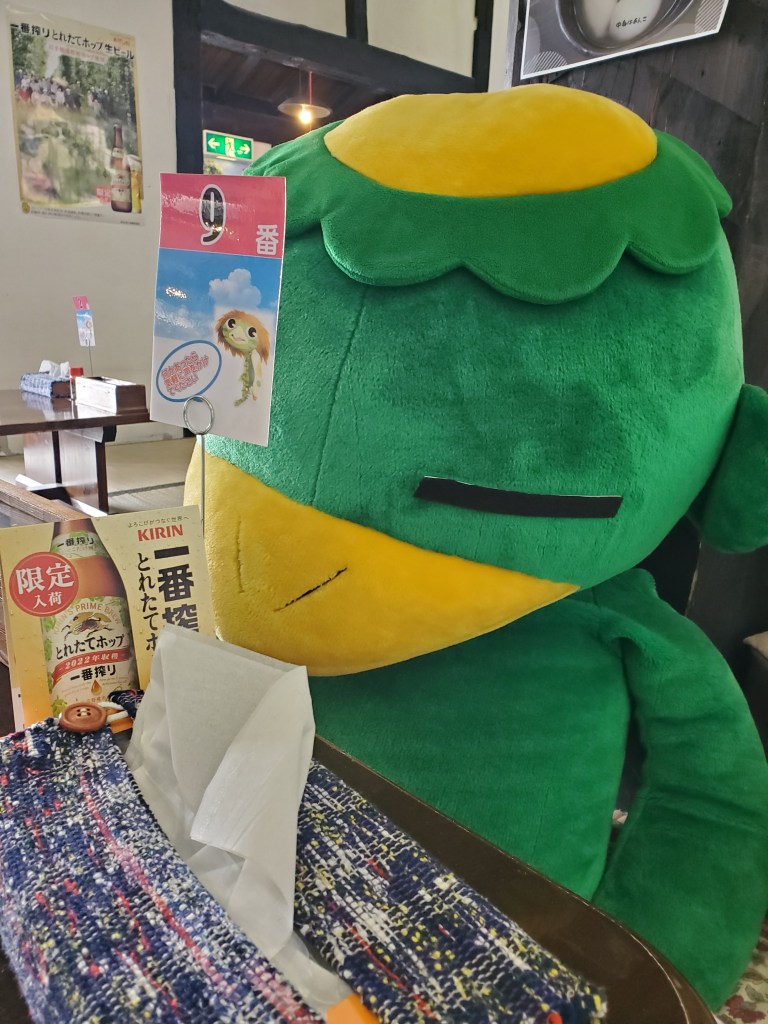
Next we went to the restaurant that was attached to Denshoen park. I ordered a noodle soup and tempura set and Jives got tempura and Udon. We sat at a comfy kotatsu (heated blanketed table) and had our delicious warm meal with complimentary green tea. We shared our table with a large stuffed kappa creature.
 BUMBLING TOURIST