

On our most recent trip to Japan in the winter of 2023, we gave ourselves an interesting side quest…

Alongside visiting the breathtaking sights of winter in northern Japan, the festivals, the snow, the onsen, we decided to track and find as many Inari shrines as we could.

We may have been playing a bit too much Ghost of Tsushima when we dreamed up this idea, but that doesn’t make the side quest any less valid!!
For those of you non video game nerds out there, in Ghost of Tsushima, amongst one of the many things you are tasked with finding are Inari shrines. Inari are mischievous spirits that look an awful lot like red foxes. These shrines are found throughout the game in a wide variety of settings, and you find these Inari shrines by following adorable red foxes through the woods, coasts and mountains of digital Japan. Once you find the shrines you can pet the foxes and rub their little tummies.
In the real Japan you will also find a lot of Inari shrines, distinguishable by their orange torii gates and fox-like statues, the most famous of which is arguably Fushimi Inari in Kyoto. Before our trip to Northern Japan I searched for Inari shrines on google maps and pinned as many as I could find near the cities we would be visiting. We were able to find quite a few of these shrines and visit them…. Also, I was blessed with the appearance of an actual Inari deep in the wintery woodlands of Sapporo!!!
In total we visited seven Inari Shrines in Japan during our two week stay.

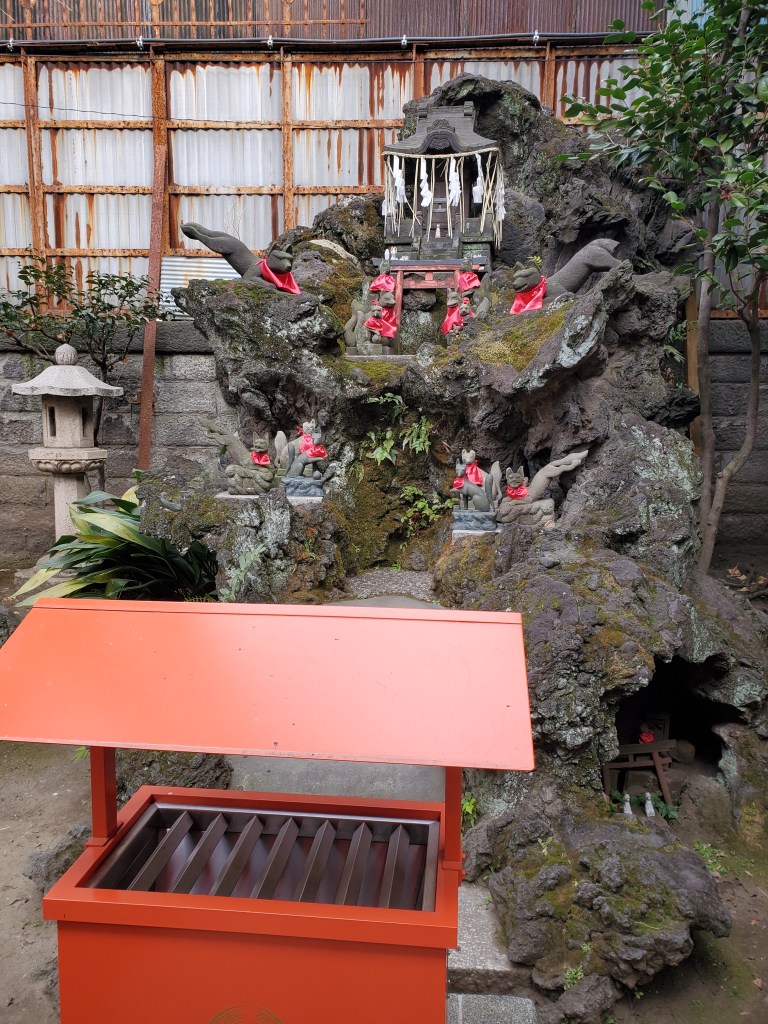
1- Tokyo Inari Shrine At Asakusa – Hikan Inari-jinja Shrine被官稲荷神社
Our first Inari Shrine was in Asakusa, in the heart of Tokyo. Hikan Inari-jinja Shrine is located behind the famous Sensoji Temple in Asakusa. If you follow along the right side of the main Sensoji shrine you will find a gravel pathway, then a parking lot and eventually an adorable little Inari shrine tucked around back.
As the story goes, in 1854 the head of the Asakusa fire brigade’s wife fell very ill. He prayed at the Fushimi Inari Shrine in Kyoto and his wife became well again. The fire chief decided to build a shrine for the Inari here in Asakusa to give thanks.


2- Tokyo Inari Shrine Near Onigiri Shrine – Tobikiinari Shrine
Our second Inari shrine is located about a 30 minute walk from Asakusa, and close to the Tokyo Sky tree. This Inari shrine is also located very close to the onigiri (riceball) shrine. The information about this temple is exclusively in Japanese, but from what I have been able to translate the shrine is built around a very special ginkgo tree and home to the tree Inari. The ginkgo tree survived the Tokyo bombings during world war two but you can see the scars left by the bombs.

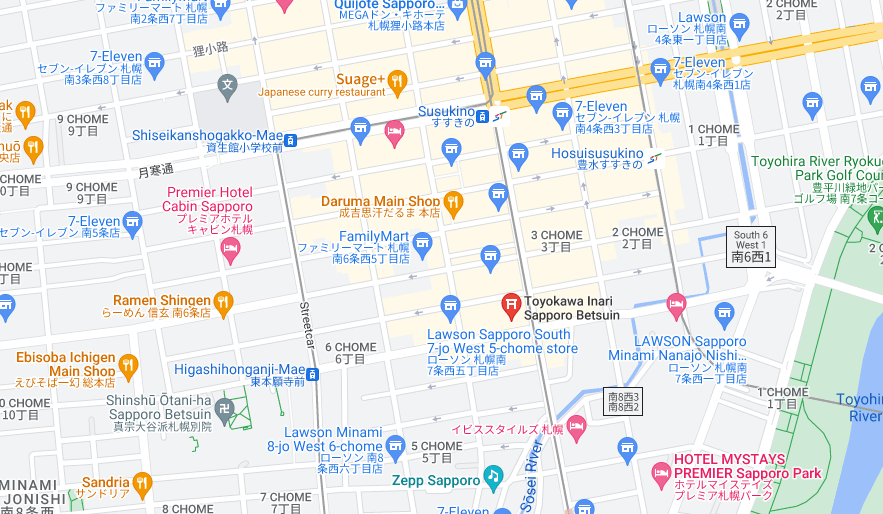
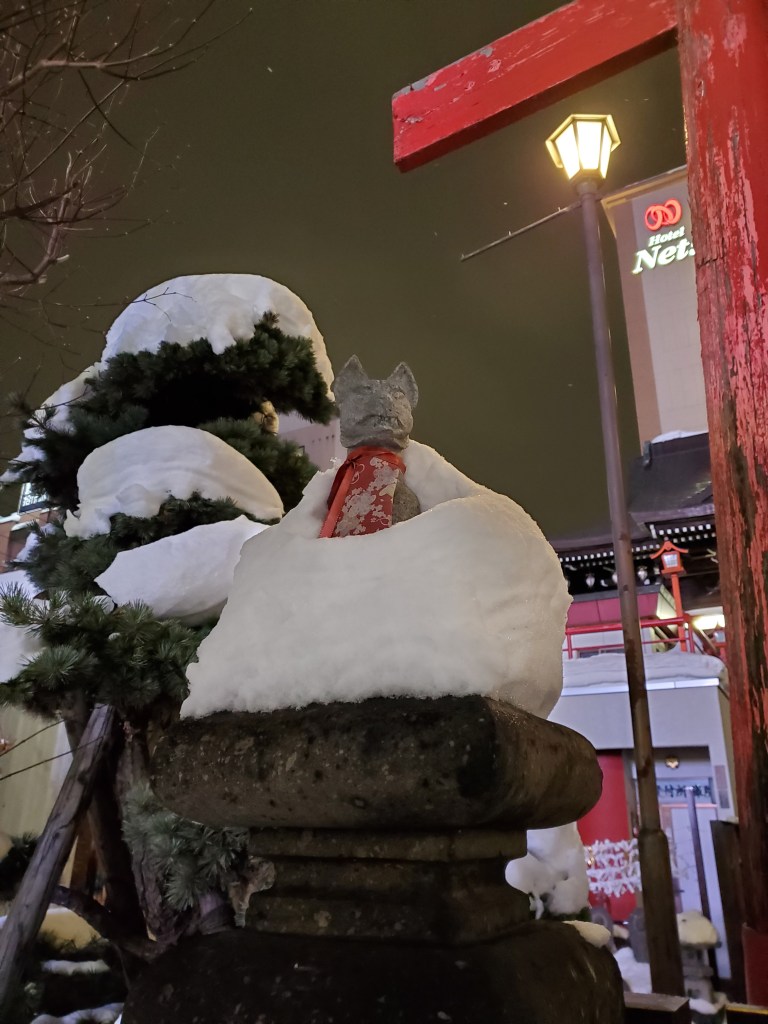
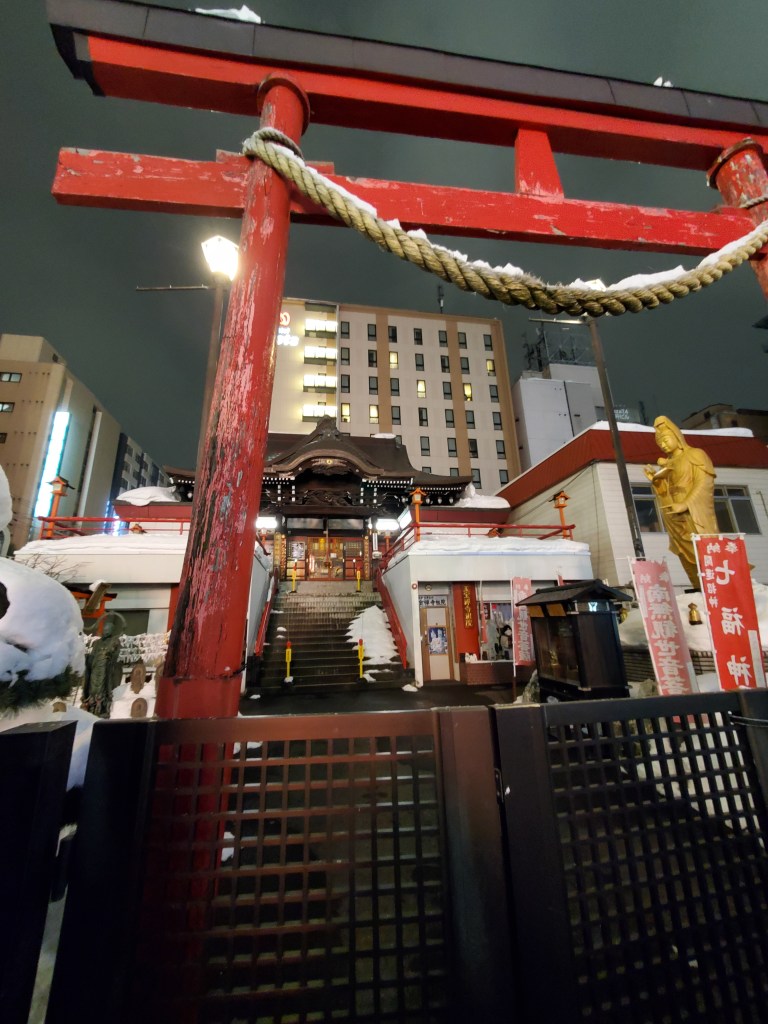
3- Sapporo on a street corner- Toyokawa Inari Sapporo Betsuin
For our third Inari Shrine we travelled to Japan’s most northern prefecture of Hokkaido. In the heart of the bustling Sapporo metropolitan area you will find Toyokawa Inari Sapporo Betsuin. When we visited the little Inari were standing guard, disguised as snowmen, what clever little guys.

4- Random Street in Aomori (with the unicorn dope stone lion)- Ryu Shrine
For our fourth Inari Shrine we travelled to Aomori, on the very northern tip of Honshu, the main island of Japan. Aomori city has one of the highest snowfalls anywhere in the world!!! We decided to wander around Aomori early one morning, with our warm coffees in hand and we stumbled upon a dope stone lion or fu dog with a unicorn horn. We decided to investigate this interesting shrine, and discovered little inari placed all around the shrine. The grounds had lovely gardens and a little island accessible by a bridge! The snow was quite deep, but it really added to the magical feeling of the shrine.


5- Narrow one in Shinjuku- Raiden Inari-jinja Shrine
Surrounded by the hustle and bustle of Shinjuku Tokyo we discover our fifth shrine, Raiden Inari-jinja. This shrine is super small but worth the visit. It looks as if crows love to visit this shrine as well, as the inari statues are in cages to keep the birds off. We made a brief visit here before heading to a few more Inari shrines in Shinjuku.


6- One with the Sunday market in Shinjuku – Hanazono Shrine
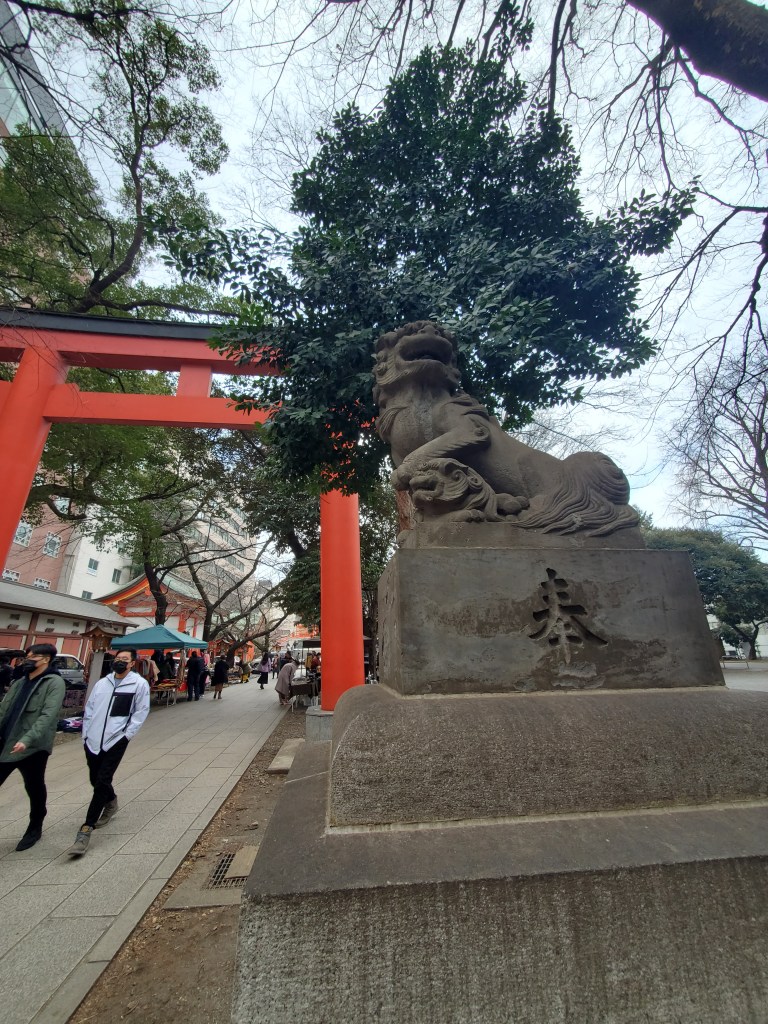
Inari shrine number six is located a few minutes from the previous shrine, yet it could not be more different. Hanazono shrine (flower garden shrine as it literally translates) is quite large, with extensive grounds for a shrine located in the heart of Shinjuku. When we visited the shrine, there was a Sunday antique market taking place.

This shrine is actually a very significant Shinto shrine, and the most important Shinto shrine in Shinjuku. It was built in the Edo period by the Hanazono family, but a shrine has existed here since 1590. The shrine is popular with businessmen who come here to wish for success as well as entertainers who frequent the shrine as well.
When we visited the shrine, some early blossoms were just beginning to emerge. There is a dedicated Inari shrine to the side of Hanazono shrine called Itoku, which you will find by following the iconic orange inari gates.


7- The Demon one in Shinjuku – Inari kio Shrine
The final Inari shrine on our tour is Inari kio, also located in Shinjuku Tokyo. Inari kio shrine is an oddity, as it is the only shrine known to be dedicated to a demon king, Kio. There is much speculation as to how this came to be, as during the Meiji period when this shrine was erected, all shrine names needed to pass as inspection by the authorities. By all accounts this shrine should not have been allowed, yet here it stands. The shrine was initially dedicated solely to Inari, but as the story goes a nearby resident went on a pilgrimage where he became very sick, he visited a Kio shrine in Kumano where he was healed. Upon returning to Shinjuku he petitioned to have the shrine be dedicated to Inari and Kio. The Kio shrine in Kumano no longer exists, so Inari Kio remains the only shrine in Japan dedicated to a demon King. This shrine is said to cure illnesses of the skin and people visit the shrine to leave offerings of tofu.
 BUMBLING TOURIST